Fancy Pens Meet IT: The Smart Writing Tools Tech Professionals Can’t Stop Talking About

Fancy Pens for IT News

Technology professionals spend much of their working lives surrounded by digital tools. Laptops, smartphones, project-management platforms, cloud dashboards, messaging applications, and artificial intelligence systems have become essential parts of the modern IT workplace. Yet one decidedly traditional tool is earning a renewed place beside the keyboard: the well-made pen.

A high-quality pen may appear simple compared with the sophisticated equipment used by software developers, cybersecurity specialists, network administrators, and technology executives. Its value lies precisely in that simplicity. A pen does not require a password, software update, charging cable, or internet connection. It allows an idea to move from the mind to the page without notifications, loading screens, or digital distractions.

This practical appeal has helped premium writing instruments become useful everyday accessories for people working in technology. From planning system architecture to recording meeting notes, the right pen can make writing feel more deliberate, comfortable, and memorable. In an industry defined by constant innovation, the growing appreciation for refined writing tools proves that dependable analog technology still belongs in the modern workplace. 💻🖊️

Why Technology Professionals Are Returning to Handwriting

IT professionals routinely work with enormous amounts of information. They review technical documentation, troubleshoot unexpected problems, manage support requests, plan projects, and communicate with colleagues across multiple platforms. Digital systems make these responsibilities manageable, yet they also create an environment filled with alerts and interruptions.

Writing by hand offers a quieter way to process information. Instead of switching between browser tabs or competing applications, a professional can concentrate on a single page. A handwritten list can clarify priorities before the workday begins. A quick diagram can reveal relationships between servers, applications, users, and data. Meeting notes can be recorded without the temptation to check email or open another window.

Research summarized by Scientific American has explored the relationship between handwriting, memory, and learning. For technology professionals who constantly absorb new procedures, programming concepts, security standards, and product information, handwritten notes can complement digital documentation.

The growing interest in Fancy Pens reflects more than a preference for attractive office supplies. A smooth, balanced writing instrument can make daily note-taking more comfortable while adding a sense of permanence to plans, ideas, and professional goals.

A Practical Tool for Solving Complex IT Problems

Technology work often begins with a problem that has not yet been clearly defined. A user reports that an application is slow. A server behaves unpredictably. A software release introduces an unfamiliar error. A development team needs to convert a broad business objective into a series of manageable technical tasks.

Handwriting can help transform an unclear problem into a visible sequence. An IT professional can list symptoms, eliminate unlikely causes, map dependencies, and record possible solutions. This process creates a physical trail of reasoning that can be reviewed without navigating through multiple digital files.

Network engineers can sketch infrastructure layouts before reproducing them in formal software. Developers can outline application logic before writing code. Cybersecurity teams can diagram possible attack paths during threat-modeling sessions. Project managers can arrange deadlines, dependencies, and staffing needs on paper before transferring the final plan into a collaboration platform.

Publications such as IEEE Spectrum provide extensive reporting on engineering and emerging technology, demonstrating how broad and interconnected the technology industry has become. As technical systems grow more complicated, professionals need simple tools that help them slow down, organize information, and recognize patterns.

A reliable pen supports that process without attempting to replace digital technology. It functions as a companion to it.

The Pen as Part of a Professional IT Workspace

The modern technology workspace has become highly intentional. Professionals carefully select mechanical keyboards, ergonomic chairs, ultrawide monitors, noise-canceling headphones, and productivity applications. Every item is expected to improve comfort, performance, or concentration.

A thoughtfully selected pen deserves the same consideration. Weight, balance, grip, ink flow, and construction can influence the writing experience. A poorly designed disposable pen may skip, smear, or become uncomfortable during a long meeting. A better instrument offers consistency and encourages clearer, more legible notes.

This attention to everyday equipment fits naturally within a technology culture that values design and functionality. Coverage from WIRED regularly examines the relationship between people and the tools they use. Although the publication is closely associated with cutting-edge devices, the underlying principle applies equally well to traditional writing instruments: good design makes routine tasks more satisfying.

A distinguished pen can also add character to a workspace dominated by screens and cables. It introduces texture, craftsmanship, and individuality without creating clutter. For remote employees, office-based teams, consultants, and executives, it can become a small but recognizable part of a professional identity.

Useful During Meetings, Planning Sessions, and Conferences

Meetings remain a central part of IT work. Development teams hold sprint-planning sessions. Security departments conduct risk reviews. Support teams discuss recurring issues. Executives evaluate budgets, infrastructure investments, and implementation timelines.

Typing notes during these conversations can sometimes create distance between participants. A laptop screen forms a physical barrier and may give the impression that the person is responding to messages or working on an unrelated assignment. Writing in a notebook allows the professional to maintain better eye contact while still recording important details.

Handwritten notes also provide flexibility. Arrows, boxes, symbols, margins, and quick illustrations can be added without selecting a formatting tool. Ideas can be connected instantly, even when a conversation moves in several directions.

Technology conferences provide another ideal setting for a dependable pen. Attendees often move between presentations, product demonstrations, networking events, and informal conversations. A notebook and pen allow them to capture names, recommendations, product details, and follow-up reminders without worrying about battery life.

Reporting from TechCrunch illustrates the speed at which startups, products, and technology trends emerge. In a fast-moving environment, the ability to record an important insight immediately can prevent valuable information from disappearing in the rush of the day.

A More Personal Way to Build Professional Relationships

Despite the technical nature of the industry, successful IT work depends heavily on human relationships. Professionals collaborate with clients, vendors, coworkers, department leaders, and end users. Clear communication and thoughtful follow-up often distinguish a trusted technology partner from an ordinary service provider.

A handwritten note can make professional communication more personal. After a successful implementation, major product launch, conference meeting, or important referral, a short message written by hand carries a different tone from a standard email. It shows that the sender invested time and attention in the relationship.

A fine pen can also serve as an appropriate professional gift. It may recognize a promotion, certification, retirement, company anniversary, or completed project. Unlike novelty gadgets that can become obsolete quickly, a quality writing instrument can remain useful for years.

The history of the pen reflects centuries of adaptation in communication and design. Modern pens retain the basic purpose of earlier writing tools while benefiting from improved materials, manufacturing techniques, and refill systems. That combination of history and continued usefulness gives them a lasting quality that many digital accessories cannot match.

The Appeal of Analog Tools in a Digital Industry

The return to analog tools does not represent resistance to technology. Many IT professionals enthusiastically adopt new software while also maintaining notebooks, paper planners, whiteboards, and printed reference materials. Each format supports a different kind of thinking.

Digital tools are excellent for storing, searching, sharing, and updating information. Paper excels at immediate access, flexible organization, and distraction-free concentration. Combining both approaches allows professionals to choose the best medium for each task.

A developer might sketch a feature on paper, build it in an integrated development environment, document it in a shared platform, and then record final reminders in a notebook. A technology leader might draft quarterly priorities by hand before distributing the completed strategy through company software.

MIT Technology Review reports on innovations that are reshaping business and society, including artificial intelligence, computing, biotechnology, and climate technology. As these systems become more capable, professionals must still exercise judgment, creativity, and clear thinking. A pen and a blank page remain remarkably effective tools for supporting those human abilities.

A Small Ritual That Encourages Focus

Many technology professionals begin the day by opening email, reviewing alerts, and checking project dashboards. This routine can immediately place them in a reactive state. Writing down the day’s priorities before entering that digital stream creates a brief period of control and reflection.

The ritual can take only a few minutes. A professional might record three essential tasks, one important conversation, and one problem that requires deeper attention. Those notes provide an anchor when messages and unexpected requests begin to compete for time.

A favorite pen can make this habit more appealing. The tactile experience of selecting the pen, opening a notebook, and putting a plan on paper signals the beginning of focused work. Repeated consistently, the practice can become part of a productive routine.

Ars Technica covers everything from operating systems and cybersecurity to science and technology policy. The breadth of its reporting reflects the range of subjects technology professionals must follow. A handwritten system for recording useful insights can help readers retain important information instead of consuming one article after another without reflection.

Craftsmanship Has Value in the Age of Disposable Devices

The technology industry produces remarkable innovations, but it also moves through devices quickly. Smartphones are replaced, accessories become incompatible, and software platforms disappear. Against this background, a durable writing instrument offers a refreshing sense of continuity.

A refillable pen can remain useful through multiple computers, job changes, and technology cycles. Its value comes from dependable performance rather than novelty. Materials, construction, and thoughtful engineering become visible every time the pen is used.

This appreciation for craftsmanship aligns with a wider interest in sustainable, long-lasting products. Keeping a well-made item and replacing only its ink can reduce reliance on disposable plastic pens. The environmental effect of a single choice may be modest, but the principle supports a more deliberate approach to purchasing.

Coverage from The Verge frequently explores how product design shapes the way people interact with technology. The same design awareness can guide the selection of analog tools. A successful product does not need a processor or screen. It needs to perform its purpose reliably and fit naturally into the user’s life.

Choosing the Right Pen for Technology Work

The ideal writing instrument depends on how and where it will be used. Professionals who take extensive notes may prefer a lightweight pen with smooth ink flow. Executives who sign contracts or present proposals may favor a more substantial design. Consultants and field technicians may need a durable pen that travels securely in a pocket, notebook, or equipment bag.

Ink type also matters. Rollerball pens often create fluid lines with minimal pressure. Ballpoint pens tend to be practical for everyday use and perform well on many kinds of paper. Fountain pens offer a distinctive writing experience and can appeal to professionals who enjoy traditional craftsmanship.

Comfort should remain a priority. A beautiful pen loses much of its usefulness if the grip causes fatigue. The best choice combines appearance, performance, and personal preference.

Price alone does not determine quality. Construction, refill availability, balance, and reliability provide better measures of long-term value. A carefully selected pen should feel like a working tool rather than an object that must remain untouched in a drawer.

Conclusion

Fancy pens have found a natural place in IT because they offer something digital tools cannot completely reproduce: a direct, physical connection between thought and written language. They help technology professionals organize complex problems, remain present during meetings, capture ideas quickly, and create more personal professional communication.

Their appeal also reflects a broader understanding of productivity. The newest tool is not always the most effective tool for every situation. Sometimes the best way to plan a sophisticated digital system begins with ink on paper.

A well-made pen complements the laptops, mobile devices, cloud platforms, and artificial intelligence tools already used throughout the technology industry. It requires no setup and becomes more familiar with time. For IT professionals balancing innovation with concentration, craftsmanship with function, and speed with thoughtful decision-making, the humble pen has earned its place beside the keyboard.

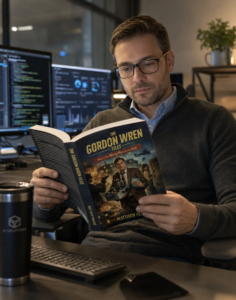
Why IT Professionals Should Read The Gordon Wren Files: The Spy Thriller That Feels Like Debugging a Conspiracy

IT News for spy thriller series

IT professionals live in a world where the smallest detail can expose the biggest problem. A strange login attempt, a misconfigured server, a missing line of code, a delayed packet, an unusual traffic pattern, or a user report that sounds impossible can all point to something much larger happening beneath the surface. That is exactly why The Gordon Wren Files: Book 1: The Wrong Man at the Door is such a strong fit for readers who work in technology, cybersecurity, systems administration, network management, software development, data analysis, and digital operations.

This is not just a story about danger, intrigue, and shadowy forces moving behind polished doors. It is a story built around observation, pattern recognition, human error, hidden systems, and the uncomfortable feeling that something ordinary is being used for something far more complicated. For an IT professional, that kind of storytelling feels familiar. It feels like being handed a system that appears to be functioning normally, only to realize the real problem is buried somewhere deep in the architecture.

The Wrong Man at the Door begins with Gordon Wren, an ordinary salesman on a work trip tied to an international summit. He is not introduced as a trained intelligence officer, military operative, or elite spy. He is someone whose advantage comes from noticing what does not belong. That detail matters. IT professionals understand that expertise is not always about brute force or dramatic action. Sometimes it is about seeing the thing everyone else overlooks. Sometimes the person who saves the day is the one who notices that a process, a delivery route, a piece of equipment, or a human explanation does not match the expected behavior of the system.

A Spy Thriller Built Around the IT Mindset

The modern IT professional is trained to think in layers. There is the visible layer, where users interact with tools and systems. There is the operational layer, where processes, workflows, permissions, and policies keep everything moving. Then there is the hidden layer, where vulnerabilities, dependencies, shortcuts, and risks quietly build until something breaks.

The Gordon Wren Files works so well for this audience because it has that same layered feeling. Gordon is pulled into a chain of suspicious events involving a house, a compromised hotel, criminal logistics, service traffic, luxury spaces, conference activity, and ordinary objects that may not be ordinary at all. That structure mirrors the way IT professionals often experience real problems. The first sign of trouble rarely announces itself as a complete disaster. It usually arrives as something small, inconvenient, and easy to dismiss.

That is why the book feels like debugging a conspiracy. Debugging is not just fixing code. It is a way of thinking. It is the discipline of following clues, testing assumptions, eliminating bad explanations, and refusing to accept surface-level answers when the evidence points somewhere else. Gordon Wren’s journey has that same rhythm. He does not simply stumble into a dangerous situation and react. He observes, connects details, questions what others accept, and keeps moving through a mystery that grows more complex with every discovery.

For readers who follow Information technology on Wikipedia, the field is broadly connected to systems that create, process, store, retrieve, and transmit information. That same idea sits beneath the appeal of this novel. The story is not only about physical danger. It is about information moving through places where it should not, people misreading systems they trust, and one man realizing that the real threat is hidden inside ordinary operations.

Why IT Professionals Connect With Gordon Wren

Gordon Wren is not the typical spy thriller hero, and that is one of the reasons he works. IT professionals are often surrounded by people who only notice them when something goes wrong. The network is invisible until it fails. The database is invisible until it loses records. The firewall is invisible until an attack gets through. The backup plan is invisible until everyone desperately needs it.

Gordon has a similar kind of underestimated presence. He is not the person everyone expects to be central to the action. He is not walking into the story with a badge, a weapon, and a reputation. He is a salesman, someone easy to underestimate, and that makes him especially compelling. In the IT world, the overlooked person is often the one who knows how everything really works. The person quietly watching the logs, tickets, alerts, access requests, and user behavior may understand the organization better than the people making the loudest decisions.

That makes Gordon relatable to anyone who has ever had to say, “That does not look right,” while everyone else wanted to move on. IT professionals know the pressure of being told that a problem is probably nothing. They know what it is like to chase a strange issue that appears random but eventually reveals a pattern. They know that the difference between a minor inconvenience and a major incident can be one person refusing to ignore a strange detail.

The Bureau of Labor Statistics describes computer and information technology occupations as including roles connected to computer systems, information security, software, databases, networks, and support functions. That variety matters because The Gordon Wren Files appeals to more than one type of technology worker. A cybersecurity analyst may connect with the hidden-threat angle. A systems administrator may connect with the operational breakdowns. A developer may connect with the logic of tracing a problem back to its source. A help desk professional may connect with the idea that the first clue often comes from something ordinary that everyone else dismisses.

The Story Feels Like Incident Response

One of the strongest reasons IT professionals should read this book is that the plot has the energy of an incident response scenario. In cybersecurity and operations, the first stage is often detection. Something looks wrong. The next stage is investigation. The team gathers evidence, checks assumptions, and follows leads. Then comes containment, escalation, and resolution. A good thriller works in a similar way, but The Wrong Man at the Door gives that process a more personal, human, and suspenseful edge.

Gordon is not just solving a puzzle for intellectual satisfaction. The stakes keep growing. The situation becomes more dangerous, the explanations become less comfortable, and the ordinary world around him begins to look unreliable. That feeling will resonate with IT professionals who have dealt with security incidents, outages, data loss, suspicious activity, or executive pressure during a technical crisis.

Organizations such as CISA regularly publish cybersecurity guidance because modern threats often move through systems people use every day. That same idea gives this novel its tension. The danger is not presented as something far away from normal life. It moves through places that are supposed to feel professional, organized, and secure. It hides behind routine. That is exactly the kind of setup technology professionals understand.

The best incident responders are not the ones who panic. They are the ones who stay curious under pressure. Gordon Wren has that same quality. He may not have the résumé of a traditional spy, but he has the instincts of someone who knows when a system is lying.

Pattern Recognition Is the Real Superpower

IT professionals spend a large part of their careers recognizing patterns. They compare expected behavior against actual behavior. They look for anomalies. They notice when a user’s report does not match the logs, when a server behaves differently after an update, when an email looks legitimate but feels off, when a vendor process changes without explanation, or when a routine event appears in the wrong context.

That is also the engine of a strong spy thriller. A conspiracy is basically a hidden system. It has actors, channels, weak points, redundancies, cover stories, and operational rules. The hero’s job is to detect the pattern before the threat fully reveals itself. That is why The Gordon Wren Files makes such a natural recommendation for IT professionals. It rewards the same mental habits that make someone good at technology work.

The NIST Cybersecurity Framework focuses on structured thinking around identifying, protecting, detecting, responding, and recovering. While The Wrong Man at the Door is fiction, its appeal to technology readers comes from that same progression. Gordon identifies things that do not fit. He watches how people and systems behave. He responds as the situation changes. He adapts as the conspiracy becomes clearer.

This is the kind of book that works especially well for people who enjoy stories where the hero wins by thinking. It is not only about chase scenes or dramatic confrontations. It is about clues. It is about inference. It is about cause and effect. It is about the satisfaction of seeing the hidden architecture of a situation finally come into view.

A Break From Screens That Still Feels Smart

Many IT professionals spend the entire day staring at dashboards, code editors, monitoring tools, support queues, documentation, analytics platforms, tickets, and security alerts. After work, it can be hard to find entertainment that is engaging without feeling mentally empty. The Gordon Wren Files offers the right kind of escape. It is entertaining, but it still respects the reader’s intelligence.

This matters because IT professionals often enjoy stories that let them think without feeling like they are still at work. A shallow thriller may provide action, but it does not always provide satisfaction. A stronger thriller gives the reader a reason to participate. It allows the reader to notice clues, question motives, and feel the momentum of discovery.

That is why this spy thriller series stands out as a smart choice for technology-minded readers. It has the suspense and energy of a spy story, but it also has the logic-driven structure of a mystery built around systems, procedures, and hidden movement.

For IT professionals who follow technology developments through resources like ACM TechNews, daily work already involves absorbing complex information and separating signal from noise. A novel like The Wrong Man at the Door uses that same instinct in a more entertaining way. It gives readers a fictional world where attention to detail is not just useful. It becomes essential.

The Ordinary Objects Make the Suspense Stronger

One of the most effective parts of The Wrong Man at the Door is the way ordinary business and service environments become suspicious. Catering equipment, conference stock, hotel spaces, premium domestic hardware, routes, packages, and service traffic all become part of the story’s tension. For IT professionals, that is especially compelling because real-world technology problems often hide inside ordinary processes.

A suspicious email does not always look suspicious. A compromised account may behave almost normally. A risky integration may be presented as a convenience. A bad process may be defended because “we have always done it this way.” A serious problem can hide inside routine operations because routine operations are where people stop paying attention.

That is exactly what gives Gordon’s story its sharp edge. He notices the ordinary becoming abnormal. That kind of suspense feels more grounded than a story built only on exotic gadgets or impossible action. It feels closer to the way real danger often works. The threat does not always kick down the front door. Sometimes it enters through a workflow, a delivery, a permission, a schedule, or a trusted relationship.

Publications like CIO Dive regularly cover the business side of technology, including strategy, infrastructure, security, cloud systems, and enterprise decision-making. That connection between business operations and hidden technical risk is part of what makes this novel work for IT readers. The story is not isolated from professional environments. It uses them as part of the suspense.

The Book Understands That Systems Fail Because People Fail

Technology professionals know that systems are rarely just technical. They are human. Password policies fail because people reuse passwords. Security tools fail when no one monitors them. Software fails when assumptions are wrong. Processes fail when teams do not communicate. Even the best system can be weakened by pride, carelessness, convenience, fear, or misplaced trust.

The Wrong Man at the Door uses that human side of systems to build tension. Gordon is not only reading objects and locations. He is reading people. He is watching reactions, assumptions, excuses, and contradictions. That makes the book more interesting than a simple action thriller because the real mystery is not only what is happening. It is why people are behaving the way they are.

This is one reason IT professionals may find the novel especially satisfying. Their work often requires technical skill and people-reading skill at the same time. A support ticket may contain only part of the truth. A department may describe a problem in emotional language rather than technical terms. A vendor may downplay a risk. A user may be embarrassed to admit what happened. A manager may want the fastest answer instead of the right one.

Technology sites such as Computerworld cover how technology works inside real organizations, where tools, people, policies, and business pressure all collide. The Gordon Wren Files taps into that same reality in fictional form. It shows that the visible system is only part of the story. The hidden motives and human choices behind the system matter just as much.

A Thriller for Readers Who Like Logic With Their Action

The best spy thrillers do not simply move fast. They move with purpose. The action matters more when it is connected to a chain of logic. The danger matters more when readers understand how the hero got there. The reveal matters more when the clues were present all along.

That is the kind of reading experience IT professionals tend to appreciate. They are used to cause and effect. They are used to tracing problems backward. They are used to asking what changed, who had access, what process failed, what dependency broke, and what assumption was wrong. The Gordon Wren Files gives those readers a story that feels built for that mindset.

Readers who follow TechRepublic for technology news, cybersecurity updates, IT leadership, and practical guidance are often looking for useful insight into how systems, people, and risk intersect. The Wrong Man at the Door delivers that intersection through fiction. It gives technology-minded readers a break from professional content while still giving them the kind of structured, clue-driven storytelling they naturally enjoy.

Gordon Wren may not be a hacker, analyst, engineer, or administrator, but he thinks like someone who knows the world is full of systems. He understands that when something does not fit, it may not be an accident. He treats small inconsistencies as meaningful. He follows the trail. That makes him a natural hero for readers who spend their careers doing the same thing in digital form.

Conclusion

The Gordon Wren Files: Book 1: The Wrong Man at the Door is an excellent read for IT professionals because it turns the habits of technical work into the engine of a spy thriller. It is about hidden systems, suspicious patterns, operational failures, human assumptions, and the power of noticing what everyone else ignores. It offers suspense, humor, mystery, and danger, but it also gives readers the deeper satisfaction of watching a problem get traced back to its source.

For IT professionals, the book feels familiar in the best way. Gordon Wren is not powerful because he is the most obvious hero in the room. He is powerful because he pays attention. He sees what others miss. He understands that when the details are wrong, the system may be compromised. That is why this story feels like debugging a conspiracy, and why it deserves a place on the reading list of anyone who works in technology.

In a world where IT professionals are constantly asked to protect systems, solve invisible problems, and make sense of confusing signals, The Gordon Wren Files offers a thrilling reminder that careful thinking is still one of the most powerful tools anyone can have.

Total Loss Florida: How IT Is Changing the Way Wrecked Cars Are Valued

Total Loss Florida for IT News

A serious collision can leave a driver facing two separate problems. The first is the damaged vehicle sitting at a repair facility or storage yard. The second is determining what that vehicle was actually worth immediately before the crash. That second problem has become increasingly dependent on information technology.

Insurance companies once relied heavily on printed valuation books, telephone calls to dealerships, handwritten repair estimates, and the personal judgment of local adjusters. Today, much of the process runs through databases, estimating platforms, vehicle-history systems, digital photographs, market-comparison software, and automated decision tools. A claim involving Total Loss Florida may now be influenced by thousands of pieces of information gathered and processed in a matter of minutes.

This technology can make claims faster and provide access to more market data. It can also produce serious valuation problems when the information entered into the system is incomplete, outdated, or based on vehicles that are not truly comparable. Florida drivers therefore need to understand both the convenience and the limitations of the technology being used to calculate the value of a wrecked vehicle.

From Printed Guides to Digital Valuation Platforms 💻

Before digital claim systems became standard, determining a vehicle’s value required considerably more manual work. An adjuster might review a printed pricing guide, call nearby dealerships, inspect newspaper advertisements, and compare recent sales. That approach could be slow, but the person handling the claim often had a direct view of the local market.

Modern valuation software can search large inventories of vehicles almost instantly. A system may consider the damaged vehicle’s model year, make, trim level, engine, mileage, equipment, general condition, location, and recent asking prices for similar vehicles. The information is then organized into a report that helps the insurer calculate an actual cash value.

The general insurance concept of a total loss occurs when repairing damaged property is no longer economically practical compared with its insured or market value. In an automobile claim, however, the final calculation is rarely as simple as comparing one repair estimate with one advertised price. Salvage value, projected repair supplements, rental expenses, labor costs, parts availability, taxes, fees, and policy terms can all affect the insurer’s decision.

Technology allows those factors to be analyzed quickly. Speed, however, does not automatically guarantee accuracy.

The Vehicle Identification Number Starts the Digital Trail 🔍

The vehicle identification number acts as the foundation of the modern valuation process. It allows computer systems to identify many of the vehicle’s original specifications and distinguish one configuration from another.

The public NHTSA VIN Decoder can identify information encoded in a VIN, including details associated with the manufacturer, vehicle type, model, and production specifications. Insurers and valuation vendors may combine VIN information with additional commercial databases to build a more complete digital profile.

This matters because vehicles that appear similar may have very different market values. A base model should not automatically be treated as comparable to a premium trim with advanced safety technology, upgraded seating, a larger engine, towing equipment, or an expensive entertainment package. Even two vehicles with the same model name can differ by thousands of dollars.

A single decoding error can affect the entire report. Missing factory options, an incorrect trim package, or the wrong drivetrain may cause the software to select lower-priced comparison vehicles. Drivers should review the valuation report carefully and confirm that the VIN, mileage, trim, equipment, and overall configuration are correct.

Digital Repair Estimates Can Push a Vehicle Toward Total-Loss Status 🛠️

Valuation technology represents only one side of the calculation. Repair-estimating software also plays a major role.

After an accident, an appraiser or repair facility may upload photographs, scan diagnostic codes, document visible damage, and enter the affected parts into an estimating platform. The software calculates estimated labor hours, paint materials, parts prices, procedures, taxes, and other repair-related expenses.

Newer vehicles make this process more complicated. A damaged bumper may contain cameras, radar sensors, parking sensors, wiring, and mounting brackets. Replacing the visible panel might also require electronic calibration. Headlights, windshields, mirrors, seats, steering components, and body panels can contain technology that substantially increases the repair cost.

Initial estimates may also change after the vehicle is disassembled. Hidden structural damage, damaged wiring, unavailable parts, additional calibration procedures, and manufacturer-required operations can increase the total. Digital estimating systems make it easier to issue supplements, but those supplements can move a borderline vehicle closer to being declared uneconomical to repair.

Florida’s Department of Financial Services explains that when repair costs meet or exceed 80 percent of a vehicle’s value, an insurer may offer payment to replace it with one of like kind and quality. The vehicle is then reported to the Florida Department of Highway Safety and Motor Vehicles.

Florida Law Still Controls the Settlement Process ⚖️

Software may perform the calculation, but the computer does not replace Florida law.

Under Florida Statute 626.9743, an insurer settling certain first-party motor vehicle losses on an actual-cash-value basis must use one of the methods permitted by the statute. One option is a cash settlement based on the actual cost of purchasing a comparable motor vehicle, including applicable sales tax.

That requirement gives real importance to the vehicles selected by the valuation software. A comparison vehicle should reasonably match the loss vehicle in areas such as model, equipment, mileage, condition, and market location. A report filled with lower trims, distant listings, unusually high-mileage vehicles, or cars with different equipment may not reflect the cost of obtaining a genuine replacement.

Florida’s title law also establishes rules for damaged vehicles. Florida Statute 319.30 defines circumstances under which a motor vehicle is treated as a total loss and addresses salvage certificates of title and certificates of destruction. The statute includes the 80 percent repair-cost standard for certain uninsured vehicles while also addressing insurer-paid replacement losses.

The FLHSMV total-loss settlement procedure provides additional administrative guidance for insurance-company settlements and title processing. These official requirements remain important even when nearly every step of the claim is handled electronically.

Market Comparables Can Strengthen or Distort the Result 📊

Digital market searches are among the most useful improvements in vehicle valuation. A computer can review far more listings than one adjuster could reasonably locate by hand. The quality of the result, however, depends on the quality of the comparisons.

An advertised vehicle may be located hundreds of miles away, have substantially higher mileage, contain fewer options, or be in poorer condition. Some listings may already be sold, duplicated across multiple websites, incorrectly described, or priced unusually low to attract attention. A vehicle advertised at a low price may also include dealer conditions that are not obvious in the listing.

The opposite problem can occur as well. An unusually expensive listing does not prove that every similar vehicle has the same value. Asking prices and completed sales are different forms of evidence. A reliable valuation should reflect a reasonable pattern within the relevant market rather than depend heavily on one unusually cheap or unusually expensive vehicle.

Location also matters. Florida is not a single, perfectly uniform automobile market. Inventory, demand, weather exposure, dealership pricing, transportation costs, and local vehicle preferences may differ between Miami, Orlando, Tampa, Jacksonville, Tallahassee, and smaller communities. Technology can expand the search area, but expanding it too far may produce comparisons that do not reflect what the owner would actually pay nearby.

Artificial Intelligence Is Entering the Claims Department 🤖

Artificial intelligence is beginning to influence several parts of insurance claims. Image-recognition tools can identify visible vehicle damage. Predictive systems can estimate whether a claim is likely to require supplements. Automated workflows can organize documents, flag inconsistencies, detect possible fraud, route claims, and recommend whether a vehicle should be inspected in person.

These systems can reduce routine administrative work, but an algorithm is only as dependable as its data, design, and oversight. A model trained on incomplete claims, inaccurate listings, or historical assumptions may repeat those problems on a larger scale.

The National Institute of Standards and Technology AI Risk Management Framework emphasizes the importance of managing risks connected with artificial intelligence and developing systems that are valid, reliable, transparent, explainable, privacy-enhanced, and fair. Those principles are especially relevant when automated systems influence financial decisions affecting consumers.

The Federal Trade Commission’s work involving artificial intelligence also highlights consumer-protection concerns surrounding automated technologies. Insurance valuation systems are specialized tools rather than consumer chatbots, but the broader lesson remains the same. A company should be able to support the claims made about its technology and should not treat automation as an excuse for unfair or deceptive results.

More Data Does Not Always Mean a Fairer Settlement 📱

A modern valuation platform can process vehicle listings, mileage records, equipment codes, geographic information, photographs, repair estimates, and historical claim data. That amount of information can make a report appear precise and authoritative.

Precision and fairness are not identical.

A valuation of $24,186 may look more scientific than a rounded estimate of $24,000, but the extra digits do not prove that the underlying comparisons were appropriate. The result can still be inaccurate when the system begins with the wrong trim, excludes valuable options, applies unsupported condition deductions, or relies on unsuitable vehicles.

Condition adjustments deserve particular attention. A valuation company may adjust a comparison vehicle upward or downward to account for differences between that listing and the damaged vehicle. Some adjustments are reasonable. Others may be difficult for a consumer to verify without photographs, inspection notes, maintenance records, and a clear explanation of the methodology.

The National Association of Insurance Commissioners’ auto insurance resources encourage consumers to understand their coverage and the way automobile insurance claims operate. A valuation report should be treated as supporting evidence, not as an unquestionable verdict produced by a computer.

Drivers Can Use Technology to Review the Technology 📲

The same digital tools available to insurers can help vehicle owners evaluate a settlement.

A driver can search local dealership inventory, save comparable listings, decode the VIN, obtain factory equipment information, organize maintenance receipts, document recent upgrades, and compare the insurer’s selected vehicles with genuinely similar alternatives. Screenshots should include the listing date, price, mileage, location, trim, options, and dealer information because online advertisements can disappear quickly.

Owners should also review every page of the insurer’s report. The most important details often appear deep within the document rather than on the settlement summary. Mileage adjustments, condition ratings, option deductions, geographic expansion, projected sold-price adjustments, and fees can all change the final figure.

Florida’s automobile insurance consumer information provides guidance on total-loss claims and other common coverage issues. Consumers experiencing difficulty with an insurer can also use the state’s insurance assistance resources rather than relying solely on information supplied by the company handling the claim.

Independent Appraisals Remain Important in a Digital Market 🚗

Technology has not eliminated the need for professional judgment. In many disputed claims, it has made that judgment even more important.

An independent vehicle appraiser can examine whether the loss vehicle was correctly identified, whether its options were included, whether condition deductions were justified, and whether the comparison vehicles reflect the relevant Florida market. An appraiser may also identify local inventory that automated software overlooked or explain why certain listings should not have been used.

The strongest appraisal is not simply a higher number. It is a documented opinion supported by accurate vehicle information, credible market evidence, photographs, adjustments, and a clear explanation. That type of analysis gives the vehicle owner a practical basis for challenging errors rather than relying on frustration or emotional attachment to the car.

Digital systems are useful, but they still require accurate inputs and responsible human review. An experienced professional can recognize when a report technically completed its calculation while failing to capture the true characteristics of the vehicle.

Conclusion

Information technology has transformed the way wrecked vehicles are inspected, estimated, compared, and valued in Florida. VIN databases identify vehicle specifications. Digital estimating platforms calculate repair costs. Market-search systems locate comparable inventory. Artificial intelligence reviews photographs, organizes claims, and predicts outcomes.

These tools can shorten claim times and make more information available. They can also hide significant mistakes behind polished reports and precise-looking numbers. Incorrect trim data, missing equipment, weak comparison vehicles, unsupported deductions, and overly broad geographic searches can all reduce a settlement.

The most reliable process combines technology with transparency, accurate evidence, Florida law, and informed human review. Drivers who understand how the systems work are better prepared to examine a valuation report, identify errors, gather stronger market evidence, and determine whether the proposed payment reflects the real cost of replacing their vehicle.

Why IT Infrastructure Can’t Afford to Ignore the B3100HH Circuit Breaker

B3100HH for IT News

Modern IT infrastructure is usually discussed in terms of servers, cloud platforms, network security, artificial intelligence, storage capacity, and internet speed. Behind every one of those technologies, however, is an electrical system that must deliver stable power without exposing expensive equipment to dangerous fault conditions. A data center can have the fastest processors and the most advanced cybersecurity tools available, yet a weakness inside its electrical distribution system can still bring operations to a sudden stop.

Circuit breakers rarely receive the same attention as firewalls, backup systems, or server hardware. They remain essential because digital equipment cannot function without a protected and properly designed electrical pathway. When excessive current, an overload, or a short circuit develops, the breaker is expected to interrupt the flow of electricity before the event damages wiring, equipment, or the surrounding facility. That protective function makes the breaker part of the IT reliability conversation, even though it sits outside the server rack. ⚡

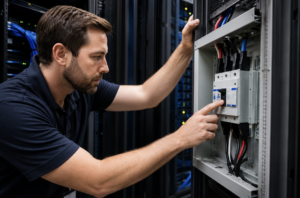
The Siemens B3100HH is a three-pole, 100-amp, bolt-on circuit breaker with a 65K rating at 240 VAC. Those specifications make it a highly particular component rather than a generic replacement that can be selected by appearance or amperage alone. When a compatible electrical panel or project specification requires this exact configuration, accurate sourcing and installation become important parts of maintaining dependable infrastructure.

IT Reliability Begins Before Electricity Reaches the Server

Servers, switches, telecommunications equipment, storage arrays, cooling systems, monitoring devices, and security appliances all depend on a continuous power chain. That chain may include utility service, switchgear, transfer switches, generators, uninterruptible power supplies, distribution panels, branch circuits, and rack-level power distribution units.

A problem anywhere along that path can affect the technology connected downstream. The failure may appear to users as a frozen application, unavailable website, failed transaction, lost connection, or cloud-service interruption. The underlying cause may have nothing to do with software. It may begin with a damaged conductor, an overloaded circuit, an incorrect breaker, a loose connection, or a protection device that no longer matches the equipment it serves.

The Uptime Institute’s research on data center outages has repeatedly emphasized the financial and operational consequences of power-related failures. Its published findings have identified power failures as a major cause of significant public service outages and noted that many reported outages produce substantial financial losses. This reinforces a practical lesson for IT leaders: electrical protection is part of uptime management rather than a separate building-maintenance concern.

What Makes This Breaker Relevant to IT Facilities

The breaker’s three-pole configuration allows it to provide protection across three conductors in a compatible system. Three-phase electrical distribution is widely used in commercial and industrial environments because it can support substantial and relatively balanced electrical loads. Facilities containing server rooms, telecommunications systems, automation equipment, production machinery, or cooling infrastructure may rely on this type of distribution.

Its 100-amp rating identifies the amount of current associated with the breaker’s intended application. The 65K rating at 240 VAC refers to its interrupting capacity at the stated voltage. Interrupting capacity matters because a breaker must be capable of safely stopping the available fault current within the system. A device with an inadequate interrupting rating may be unable to manage a severe fault safely.

Siemens documentation explains that molded-case circuit breakers are designed and tested according to applicable standards and identifies “HH” as an extra-high interrupting-capacity designation within its catalog-number system. The same documentation also stresses the importance of using the correct conductor temperature ratings, frame, voltage, pole count, and application characteristics. These details demonstrate why breaker selection must be based on complete electrical specifications rather than a matching amp number. Siemens’ molded-case circuit breaker catalog provides broader technical context for these product classifications.

Circuit Protection Is Part of Cyber-Physical Security

IT security teams traditionally concentrate on passwords, access control, endpoint protection, encryption, malware, and network monitoring. Those safeguards remain necessary, although they represent only one side of operational security. A modern facility is a cyber-physical environment in which digital systems depend on physical equipment.

Electrical systems increasingly include connected monitoring platforms, remotely managed power devices, smart meters, networked UPS units, environmental sensors, and automated controls. These technologies improve visibility and response times, yet they also create dependencies between information systems and facility systems.

The Cybersecurity and Infrastructure Security Agency and the Department of Energy have warned that internet-connected uninterruptible power supply devices can become targets when default credentials and weak security practices remain in place. Their guidance on protecting UPS devices recognizes that these systems may support anything from a few servers to an entire data center. The guidance illustrates why IT departments must understand the complete power environment surrounding their equipment.

A circuit breaker is not a replacement for cybersecurity controls, and cybersecurity tools cannot replace correct electrical protection. The two disciplines support the same objective: preventing a manageable problem from becoming a widespread operational failure.

The Cost of Using the Wrong Replacement

A failed or obsolete breaker can create pressure to locate a replacement quickly. During an outage or urgent repair, purchasing teams may be tempted to accept a breaker that appears similar. That shortcut can create larger problems when the replacement has a different mounting style, interrupting rating, pole configuration, voltage rating, frame design, or panel compatibility.

A bolt-on breaker is secured directly to the panel connection point. It is not installed in the same manner as a plug-in breaker. Even when two devices share a 100-amp rating, differences in mounting, manufacturer requirements, physical design, or electrical classification may prevent safe interchangeability.

The basic function of a breaker is to interrupt excessive current and protect the electrical circuit and connected equipment. The Wikipedia overview of circuit breakers explains that breakers differ from one-time-use fuses because they can generally be reset after the fault has been cleared. That reset capability does not make breakers universal. Each device still has to be selected for the electrical system in which it will operate.

For IT facilities, a mismatched component may delay repairs, fail an inspection, create unreliable protection, or introduce a serious safety concern. Exact part identification helps electricians, maintenance teams, and purchasing departments avoid guesswork during time-sensitive work.

Data Center Growth Is Increasing Pressure on Electrical Systems

The rapid expansion of artificial intelligence, cloud computing, streaming services, digital commerce, and online communications is increasing electricity demand across the technology sector. More computing capacity requires more servers, stronger cooling systems, additional backup power, expanded distribution equipment, and carefully coordinated protection.

The U.S. Department of Energy has reported that data center electricity demand is growing rapidly and may represent a significantly larger portion of national electricity use within the next several years. Its analysis of data center electricity demand describes projected growth driven partly by artificial intelligence applications and continuing data center expansion.

That growth affects more than utility companies. It places greater responsibility on facility owners, electrical contractors, engineers, and IT administrators to understand capacity limits and protection requirements. Older electrical systems may need upgrades. Replacement components may become harder to source. Maintenance schedules may need to account for facilities that have little tolerance for downtime.

Recent Reuters reporting on data centers and the electric grid has also described how large groups of data centers can react to voltage disturbances and create unexpected challenges for grid operators. The reporting noted that sensitive computer hardware and power supplies require stable power conditions and can be damaged or degraded when voltage moves outside acceptable ranges.

These developments make electrical planning increasingly relevant to IT news. The technology industry’s demand for power is reshaping data center construction, grid management, equipment procurement, backup strategies, and infrastructure investment.

Maintenance Matters as Much as Initial Installation

A properly selected breaker still requires an appropriate maintenance environment. Dust, moisture, corrosion, heat, vibration, loose connections, mechanical wear, and repeated fault events can affect electrical equipment over time. Maintenance teams should treat panel inspections and breaker condition assessments as part of a broader reliability program.

The National Electrical Manufacturers Association publishes guidance for the inspection and preventive maintenance of molded-case circuit breakers used in commercial and industrial applications. Its standards plan includes ANSI/NEMA AB 4-2023, which addresses this area of maintenance. Preventive attention is particularly important in facilities where a single electrical interruption may affect customers, employees, production systems, communications, or critical records.

Electrical work should be completed by qualified professionals who can evaluate panel compatibility, conductor sizing, available fault current, torque requirements, system voltage, applicable codes, and manufacturer instructions. IT personnel can contribute by documenting which systems depend on each circuit, identifying acceptable maintenance windows, and coordinating shutdown procedures with facility teams.

Breaker Documentation Supports Disaster Recovery

Disaster recovery planning often focuses on backups, cloud replication, alternate locations, recovery time objectives, and communication procedures. Those plans are incomplete when the organization has little documentation for the electrical infrastructure supporting its systems.

Panel schedules, breaker part numbers, one-line diagrams, maintenance records, load information, spare-parts inventories, and emergency contacts can shorten the response to an electrical failure. A clear record of the required breaker prevents purchasing staff from relying on a blurry photograph, partial description, or hurried visual comparison.

The NIST Contingency Planning Guide for Federal Information Systems explains the importance of planning for disruptions involving resources outside an organization’s direct control, including electrical power and telecommunications. Although the guide addresses federal information systems, its underlying principle applies broadly: recovery depends on preparation, testing, documentation, and an understanding of critical dependencies.

Keeping an exact replacement available may make sense for facilities with aging equipment, long procurement times, strict uptime requirements, or uncommon panel configurations. The decision should be based on a qualified assessment rather than fear-driven purchasing. Accurate inventory planning allows an organization to respond quickly without compromising compatibility.

IT and Facilities Teams Need a Shared Reliability Strategy

Organizational silos create risk. The IT department may understand the servers but have limited knowledge of the electrical panels. Facility personnel may understand the building infrastructure but lack visibility into the business impact of shutting down a particular circuit. Purchasing teams may receive a part number without knowing why an exact match is required.

A shared reliability strategy brings these groups together. IT teams can identify critical loads and acceptable downtime. Electricians and facility managers can evaluate electrical capacity and protective devices. Purchasing departments can maintain verified vendor and part information. Leadership can fund preventive maintenance based on business impact rather than waiting for a failure.

This cooperation is becoming more important as physical and digital infrastructure continue to merge. Smart power devices, automated transfer systems, environmental controls, remote monitoring, and data center management platforms have created an environment in which facility performance is directly connected to IT performance.

Conclusion

The B3100HH circuit breaker may appear to be a small part of a much larger electrical system, yet its role reaches directly into IT reliability. In a compatible application, its three-pole design, 100-amp rating, bolt-on mounting style, and 65K interrupting rating at 240 VAC are specific characteristics that must be verified before installation.

Servers and networks depend on layers of electrical equipment that most users never see. When those layers are properly designed, maintained, documented, and protected, technology operates quietly. When they are neglected, the result may be downtime, damaged equipment, safety hazards, delayed repairs, or lost revenue.

IT infrastructure can no longer be viewed as a collection of computers separated from the building that supports them. Electrical distribution, backup power, cooling, cybersecurity, and disaster recovery belong to the same resilience strategy. Giving the correct circuit breaker the attention it deserves is one practical step toward keeping that strategy strong, safe, and dependable. 🛡️

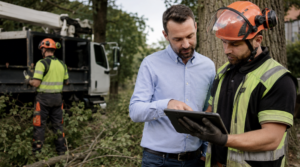
Why IT Managers Are Becoming a Must-Have for Tree Experts, Not a Luxury 🌳💻

IT News for Tree Expert

Tree experts work in a field where trust, safety, response time, and reputation matter every single day. When a homeowner, property manager, insurance adjuster, attorney, municipality, or commercial property owner reaches out for help, they are usually dealing with something important. It may be a hazardous tree near a structure, a storm-damaged property, a legal dispute involving tree failure, an insurance claim, or a long-term tree health concern. In every situation, the client expects answers, documentation, communication, and professionalism.

That is exactly why IT managers are no longer a luxury for tree experts. Technology has become part of the way tree professionals operate, communicate, document, schedule, estimate, protect client information, and grow their businesses. A company can have strong field knowledge, years of arboricultural experience, and excellent customer service, but if its digital systems are weak, outdated, unsecured, or disorganized, opportunities can slip away before anyone realizes what happened.

A modern Tree Expert does far more than inspect trees and provide recommendations. Today, tree experts may handle digital reports, cloud storage, photos, mapping tools, client portals, email communication, scheduling software, online reviews, website leads, cybersecurity risks, billing platforms, and mobile devices used in the field. That means IT management is not just about fixing computers. It is about protecting the business, supporting the team, serving the client, and keeping operations moving.

The Tree Industry Is More Digital Than Most People Realize


Many people still picture tree work as a purely hands-on business. They think about climbing gear, chainsaws, bucket trucks, stump grinders, soil health, cabling, pruning, and tree removal. Those tools still matter, but behind the scenes, the modern tree industry also depends heavily on digital tools.

Tree experts use software to manage appointments, upload inspection photos, write proposals, send invoices, store client records, track crews, maintain equipment schedules, and communicate with property owners. Some professionals also use geographic information systems, drone imagery, digital measuring tools, and advanced reporting platforms. The role of technology in business has grown so much that Information technology management is now recognized as a discipline focused on aligning technology resources with business needs and priorities.

For tree experts, that alignment is critical. A missed email can become a lost estimate. A broken scheduling system can lead to late crews. A lost inspection report can damage trust. A hacked email account can expose sensitive client conversations. A website that goes down during storm season can cost thousands of dollars in missed calls.

This is why an IT manager is becoming so important. The goal is not just to have someone available when something breaks. The goal is to create a reliable technology foundation that keeps the tree business organized, secure, responsive, and ready for growth.

IT Managers Help Protect Client Trust


Trust is one of the most valuable assets a tree expert can have. Clients often contact tree professionals because they need guidance on something they do not fully understand. They may be worried about a tree leaning toward their home, concerned about roots affecting a foundation, or trying to understand whether a tree is healthy enough to save.

When clients share photos, property information, addresses, contracts, invoices, reports, and legal or insurance-related details, that information needs to be protected. Cybersecurity is no longer only a concern for banks, hospitals, and large corporations. Small and specialized businesses are also targets because criminals know they may not have strong protections in place.

The Cybersecurity and Infrastructure Security Agency offers Cyber Guidance for Small Businesses, warning that small businesses are often vulnerable to damaging cyber incidents such as ransomware. That matters for tree experts because a ransomware attack could lock a company out of its files, delay jobs, interrupt billing, and create serious stress during a busy season.

An IT manager can help protect client trust by setting up secure email, strong passwords, multi-factor authentication, safe file storage, employee device policies, regular backups, software updates, and cybersecurity training. These protections may not be visible to clients, but they help create a smoother and safer experience for everyone involved.

Missed Calls and Broken Systems Can Cost Real Jobs


Tree experts often serve clients who need quick answers. After a storm, homeowners may call several companies at once. Property managers may need documentation fast. Attorneys and insurance professionals may require detailed reports with a deadline attached. If a tree company’s phone system, website form, email inbox, or scheduling software fails, the business may lose the opportunity before it even knows there was a problem.

An IT manager helps prevent those silent losses. They can make sure the website works correctly, contact forms send messages to the right inbox, phone systems route properly, voicemail is set up professionally, and client information does not disappear into a messy system.

This is especially important for tree experts who receive leads from Google, referrals, directories, social media, and their own website. When a lead comes in, the business needs a dependable process. The right technology setup can help organize names, phone numbers, addresses, notes, photos, estimates, job status, and follow-ups.

Without IT oversight, small problems can snowball. A form may stop working for weeks. Emails may land in spam. A team member may store important job photos on a personal phone. A laptop may crash with no backup. An invoice system may fail at the worst time. These issues may look small individually, but together they create friction that can cost real revenue.

Tree Experts Need Strong Documentation Systems


Documentation is one of the most important parts of professional tree work. Tree experts often need to take photos, record site conditions, write assessments, prepare reports, and maintain accurate records. This documentation can support property decisions, insurance claims, legal matters, risk assessments, maintenance planning, and customer communication.

A strong IT manager helps create systems that make documentation easier to store, find, share, and protect. Instead of photos being scattered across phones, texts, emails, and laptops, an IT manager can help establish a central cloud-based storage system with clear naming rules and permission levels. Instead of reports being saved in random folders, they can be organized by client, property, date, and project type.

This matters because professionalism is not only about what happens in the field. It is also about what happens after the inspection or service call. A client who receives a clear, timely, well-organized report is more likely to trust the company. A team that can quickly find past documentation is more likely to respond confidently when a client asks for follow-up information.

The National Institute of Standards and Technology provides a Small Business Cybersecurity Corner, offering resources that help businesses think through cybersecurity basics, cloud security, employee awareness, and risk reduction. For tree experts, these kinds of resources support the bigger goal of managing records responsibly and protecting the information clients provide.

IT Managers Support Crews in the Field


Tree work happens outside, often in unpredictable conditions. Crews may be spread across different job sites. They may need access to schedules, maps, client notes, job photos, work orders, safety information, and equipment details. When technology works well, the field team has what it needs. When technology fails, crews may waste time calling the office, searching for missing details, or waiting for updated instructions.

An IT manager can help tree companies choose and maintain mobile-friendly tools that support field operations. This may include scheduling apps, digital forms, photo upload systems, GPS tools, communication platforms, and secure access to job information. The right setup can reduce confusion and keep everyone moving in the same direction.

This is not about making a tree company overly complicated. In fact, good IT management often makes the business feel simpler. Instead of five disconnected tools, the company may only need two or three systems that work well together. Instead of relying on memory or scattered text messages, the team can follow a clear digital workflow.

Better field technology also helps with accountability. Managers can see job progress. Office staff can answer client questions more accurately. Crews can upload photos before leaving a site. Estimators can review past notes before visiting a property. Everyone benefits when the technology is organized around the way the business actually works.

Cybersecurity Is Now a Business Growth Issue


Many business owners think of cybersecurity as a defensive expense. They see it as something that prevents bad things from happening. That is true, but cybersecurity is also connected to growth. A company that protects its systems is more dependable. A company that avoids downtime can respond faster. A company that secures client data looks more trustworthy.

Cybersecurity also matters because clients are becoming more aware of digital risk. Commercial property owners, municipalities, attorneys, insurance professionals, and larger organizations may care about how vendors handle data, communication, and documentation. A tree expert who can show professionalism in both fieldwork and digital operations has a stronger position in the marketplace.

The NIST Cybersecurity Framework 2.0 for Small Business provides a practical way for smaller organizations to think about managing and reducing cybersecurity risk. An IT manager can help translate those kinds of best practices into everyday business habits.

That may include controlling who has access to files, making sure former employees no longer have access to company systems, training staff to recognize phishing emails, securing mobile devices, and making sure backups are actually working. These actions may not sound exciting, but they are powerful. They protect the business from interruptions that can drain time, money, and energy.

IT Managers Help Tree Experts Look More Professional Online


Before many clients call a tree expert, they look online. They may search Google, visit the website, read reviews, check service pages, view photos, or compare companies. If the website is slow, outdated, insecure, or difficult to use, the client may move on.

An IT manager may not be the same as a marketing agency, but IT management still plays an important role in online professionalism. Website security, hosting performance, email deliverability, domain management, software updates, analytics setup, form testing, and data backups all affect how a business appears online.

A tree expert can have excellent content and strong search visibility, but if the website breaks or forms stop working, those efforts lose power. IT managers help keep the digital foundation stable so marketing can do its job.

Industry news sources such as CIO Dive regularly cover how technology leadership is changing as businesses rely more on cloud systems, cybersecurity, artificial intelligence, data, and digital operations. While many of those stories focus on larger companies, the lesson applies to smaller specialized businesses too. Technology leadership is becoming part of business leadership.

For tree experts, that means IT can no longer be treated as an afterthought. The website, email, phone system, client database, scheduling software, reports, and cybersecurity tools all work together. When they are managed well, the business looks more professional and runs more smoothly.

AI and Automation Make IT Management Even More Important


Artificial intelligence and automation are changing how many businesses operate. Tree experts may use AI tools for writing emails, summarizing notes, organizing reports, improving customer service, or managing internal tasks. Automation can also help with appointment reminders, follow-ups, review requests, billing notices, and lead tracking.

These tools can save time, but they also create new responsibilities. Businesses need to know where data is going, who has access, which tools are approved, and how client information is protected. Without IT management, employees may start using random apps without understanding the risks.

Technology news sources such as ZDNET frequently cover security, AI, cloud tools, and business technology trends. The constant theme is clear: as technology becomes more powerful, businesses need stronger oversight.

For tree experts, AI and automation should make the business better, not messier. An IT manager can help choose tools that fit the company’s needs, connect systems properly, and create safe guidelines for use. That allows the company to benefit from modern technology without creating unnecessary confusion or risk.

A Good IT Manager Helps the Business Scale


A tree expert may start with a small team and a simple process. Over time, the business may grow into multiple crews, more trucks, more service areas, more reports, more commercial clients, and more administrative work. What worked for a small operation may not work for a growing company.

An IT manager helps the business prepare for that growth. They can recommend systems that scale, prevent duplicate work, reduce manual tasks, and make it easier to train new employees. They can also help leadership understand which tools are worth keeping and which ones are creating unnecessary cost or confusion.

This is especially important when a business has several people touching the same client process. One person may answer the phone. Another may schedule the estimate. Another may inspect the property. Another may prepare the proposal. Another may complete the work. Another may send the invoice. Without good systems, details can fall through the cracks.

An IT manager helps connect those steps so the client experience feels seamless. Better systems support better service. Better service supports better reviews. Better reviews support stronger visibility and more referrals.

IT Management Is Not Just for Big Companies Anymore


There was a time when having an IT manager sounded like something only large companies needed. That time has passed. Smaller businesses now use many of the same types of technology larger companies use: cloud storage, email platforms, websites, online scheduling, digital payment tools, cybersecurity software, customer databases, and mobile apps.

The difference is that small businesses often have less room for error. A large company may be able to absorb a technology problem more easily. A smaller tree business may feel the impact immediately. One broken system can affect scheduling, revenue, client trust, and team morale.

Resources such as Computerworld show how quickly workplace technology, security, cloud tools, and digital operations continue to evolve. A tree expert does not need to chase every new trend, but the business does need someone who understands what matters, what is risky, and what can be ignored.

That is where IT management becomes valuable. It brings clarity. It helps the business avoid panic decisions. It creates structure before problems happen. It gives the owner and team more confidence that their digital tools are supporting the company instead of quietly holding it back.

Conclusion: IT Managers Are Becoming Part of the Tree Expert’s Growth Strategy


Tree experts already carry a lot of responsibility. They protect people, property, trees, landscapes, and long-term value. They make decisions that require knowledge, experience, safety awareness, and professional judgment. In today’s market, they also need reliable technology supporting them behind the scenes.

IT managers are becoming a must-have for tree experts because technology now touches almost every part of the business. It affects how leads come in, how clients are served, how reports are stored, how crews communicate, how data is protected, how payments are processed, and how the company grows.

This is not about turning a tree business into a tech company. It is about making sure the business has the digital support it needs to operate with confidence. Strong IT management helps protect client trust, reduce downtime, improve communication, support field crews, strengthen cybersecurity, and create a more professional experience from the first call to the final invoice.

For tree experts who want to grow, protect their reputation, and serve clients at a higher level, IT management is no longer optional. It is becoming part of the foundation that allows the entire business to stand stronger.

Why a Title IX Lawyer Matters in the IT World

IT News for Title IX Lawyer

The IT world is no longer only about networks, software, cybersecurity, cloud systems, and technical support. Today, information technology touches almost every part of modern education, business operations, workplace communication, online learning, student records, digital investigations, and institutional compliance. Because of that, IT companies are increasingly connected to issues that go far beyond hardware and software. One area that deserves more attention is Title IX.

Title IX is often associated with schools, colleges, universities, athletics, discrimination claims, sexual misconduct investigations, and student rights. At first glance, that may not sound like something an IT company needs to understand. However, the modern digital environment has changed how schools and organizations handle communication, evidence, reporting, privacy, cybersecurity, and compliance. When technology becomes part of the record, the IT company supporting that environment may become part of the bigger conversation.

That is why understanding the role of a Title IX Lawyer can matter in the IT world. IT companies may not provide legal advice, but they can still recognize when legal issues are connected to digital systems, records, access, privacy, and institutional response. Knowing when a qualified attorney may be needed can help protect clients, support better decision-making, and build more trust in professional relationships.

The IT World Is Deeply Connected to Education and Compliance

Information technology plays a central role in modern schools, colleges, universities, and workplace training environments. According to Wikipedia’s overview of information technology, IT includes the use of computers, telecommunications, and related systems to store, retrieve, transmit, and manage information. In education, that can include student portals, learning management systems, email platforms, video conferencing tools, access controls, cloud storage, reporting systems, security software, and digital archives.

When an institution faces a Title IX-related issue, digital information may become important very quickly. Emails, login records, chat messages, security footage, online forms, file permissions, shared documents, and communication logs may all become part of the bigger picture. An IT company may be asked to preserve records, secure accounts, support access reviews, assist with data retrieval, or help prevent unauthorized changes to information.

This is where IT work and legal awareness begin to overlap. An IT provider should not act as a lawyer, but it should understand that certain situations require careful handling. If records are deleted, altered, exposed, or mishandled, the problem may become larger than a technical issue. It may affect an investigation, a student’s rights, an employee’s rights, an institution’s responsibilities, or the credibility of the entire process.

Digital Evidence Can Play a Major Role in Title IX Matters

In the past, many school-related disputes depended heavily on witness statements, written reports, and in-person testimony. Today, digital evidence can play a major role. A Title IX matter may involve messages sent through school email, screenshots from social media, video call records, shared files, device access, online harassment, digital stalking, or data stored in cloud systems.

This matters for IT companies because they may manage or support the very systems where this information lives. If an institution asks for help accessing records, restoring data, confirming login history, reviewing permissions, or locking down accounts, the IT company needs to approach the request carefully and professionally.

Technology news sources such as Reuters Technology News regularly report on how fast digital systems, artificial intelligence, cybersecurity, and data privacy are changing the business world. Those changes also affect education and institutional compliance. As more communication moves online, more sensitive matters leave digital footprints. That means IT teams may be closer to legal and compliance concerns than they realize.

A Title IX lawyer can help institutions, students, families, employees, and other parties understand rights, obligations, procedures, and risks. Meanwhile, an IT company can help make sure the technical side is handled responsibly. When those roles are respected, the client is better protected.

Cybersecurity and Title IX Can Overlap More Than People Realize

Cybersecurity is not only about stopping hackers. It is also about protecting sensitive information from unauthorized access, exposure, misuse, or destruction. In a Title IX matter, privacy can be extremely important. Records may involve students, employees, witnesses, disciplinary issues, medical information, mental health concerns, personal communications, or sensitive allegations.

If a school or organization has weak cybersecurity practices, a Title IX-related matter can become even more complicated. Unauthorized users may access private files. Internal users may see information they should not see. Emails may be forwarded without permission. Shared drives may be poorly organized. Former employees may still have access. Cloud permissions may be too broad. These are IT issues, but they can quickly create legal and reputational problems.

The Cybersecurity and Infrastructure Security Agency publishes cybersecurity advisories that show how seriously organizations must treat digital risk. For IT companies serving schools, universities, and organizations connected to education, strong cybersecurity is not just a technical selling point. It is part of protecting people, records, and institutional trust.

When Title IX issues arise, IT companies may need to move quickly but carefully. They may need to preserve records, prevent account tampering, limit access, document actions, and avoid making assumptions. A Title IX lawyer can help guide the legal side, while the IT provider supports the integrity of the technology environment.

IT Companies Help Protect the Systems That Hold Sensitive Records

A trusted IT company does more than fix computers or install software. It protects the systems that hold an organization together. That includes communication platforms, file storage, backup systems, authentication tools, access logs, endpoint security, mobile devices, and administrative dashboards.

The National Institute of Standards and Technology Cybersecurity Framework is widely used as a guide for helping organizations manage cybersecurity risk. While not every small IT company needs to sound overly technical when speaking to clients, understanding the importance of identifying, protecting, detecting, responding, and recovering from cybersecurity issues can help build stronger client relationships.

This connects to Title IX because sensitive records need structure and protection. If a school or organization does not know where records are stored, who has access, whether backups exist, or how long data is retained, it may struggle during a serious complaint or investigation. An IT company that helps clients create cleaner systems, better access control, stronger documentation, and safer storage becomes more valuable.

A Title IX lawyer may focus on rights, process, representation, and legal strategy. An IT company may focus on security, systems, and digital records. Both roles can support a better outcome when each side stays in its lane and understands the importance of the other.

Online Learning Has Made Title IX Awareness More Important for IT Providers

Online learning, remote work, video meetings, student portals, digital classrooms, and cloud-based communication have made education more connected than ever. They have also created more places where problems can happen. Harassment, discrimination, retaliation, bullying, inappropriate communication, privacy violations, and misconduct allegations may all involve digital platforms.

IT companies that support educational organizations should understand that the tools they manage may become part of a complaint or investigation. A video platform may contain meeting records. A student portal may show access activity. A chat tool may contain messages. A device management system may show when a laptop was used. A cloud folder may show who opened or modified a document.

The Federal Trade Commission’s business guidance on data security reminds businesses that protecting data is a serious responsibility. For IT companies, this is not just about compliance language. It is about helping clients avoid preventable mistakes. When sensitive educational or workplace issues arise, poor data handling can make an already difficult situation worse.

A Title IX lawyer can help clients understand how the law applies to a particular situation. An IT company can help make sure the technology environment does not create confusion, unnecessary exposure, or avoidable risk.

IT Companies Can Build Trust by Knowing When to Recommend Legal Help

One of the best ways an IT company can build trust is by knowing the limits of its role. Clients often ask IT providers for help because they trust them. They may explain situations involving employee issues, student complaints, online harassment, access concerns, or sensitive records. The IT provider may be the first outside professional to hear that something serious is happening.

In those moments, it is important not to guess, minimize, or give legal advice. Instead, the IT company can say that the situation sounds sensitive and may need guidance from the right legal professional. That is not weakness. That is wisdom.

Technology news from sources such as MIT Technology Review shows how quickly the technology landscape is evolving, especially around artificial intelligence, security, data, and digital ethics. As technology becomes more powerful, organizations need both technical guidance and legal awareness. IT companies that understand this are better positioned as serious, responsible partners.

Referring a client to the right kind of legal support does not take value away from the IT company. It increases trust. It shows maturity. It shows that the IT provider understands the bigger picture and cares about protecting the client, not just closing a ticket.

Title IX Issues Can Affect Reputation, Operations, and Digital Responsibility

When a Title IX issue arises, the impact can be significant. Schools, colleges, universities, and organizations may face public scrutiny, internal pressure, emotional stress, student concerns, staff concerns, legal deadlines, documentation needs, and communication challenges. If technology systems are disorganized, the situation can become even harder to manage.

An IT company may not control the investigation, but it can influence how well the digital environment supports the process. Are records preserved properly? Are accounts secured? Are permissions reviewed? Are backups available? Is sensitive information protected? Are there logs showing who accessed what? Are old accounts disabled? Are systems organized enough for the client to respond responsibly?

The U.S. Department of Education is an important authority source for education-related matters, including federal education policy and institutional responsibilities. For IT companies working with educational clients, it is smart to understand that technology often supports larger compliance responsibilities.

A Title IX lawyer matters because these situations are not just administrative tasks. They can affect real people, serious rights, and long-term outcomes. IT companies that understand the sensitivity of these matters can serve clients with more care, caution, and professionalism.

Why This Matters for IT Marketing and Business Growth

For an IT company, writing about topics like Title IX may seem outside the normal lane. However, it can actually strengthen authority when handled the right way. IT companies serve real organizations with real risks. Those risks include cybersecurity, privacy, compliance, digital communication, online learning, workplace systems, and sensitive records.

Content that connects IT services to serious institutional concerns can help improve trust with business owners, school administrators, operations managers, compliance officers, and decision-makers. It shows that the IT company understands more than software. It understands the environment clients operate in.

This kind of content can also support stronger authority signals for search engines when it links to credible sources, stays helpful, avoids exaggeration, and connects naturally to relevant topics. Strong content should not be stuffed with keywords or filled with empty claims. It should provide useful context, connect related ideas, and help readers understand why a topic matters.

When an IT company discusses Title IX responsibly, it can position itself as a thoughtful technology partner. It does not need to pretend to be a law firm. It simply needs to show that it understands how technology, privacy, records, cybersecurity, and legal sensitivity can intersect.

Conclusion

A Title IX lawyer matters in the IT world because technology now touches nearly every part of education, communication, compliance, privacy, and digital evidence. IT companies may not handle legal representation, but they often manage the systems where sensitive information is stored, accessed, protected, and preserved.

When schools, universities, businesses, or organizations face Title IX-related concerns, the digital side cannot be ignored. Emails, cloud files, login records, video platforms, student portals, security systems, and access controls may all matter. An IT company that understands this connection can serve clients more responsibly and build stronger trust.

The best IT providers know when to solve a technical problem and when to recognize that a legal professional should be involved. That kind of awareness protects the client, strengthens the relationship, and shows that the IT company is thinking beyond the screen.

In a world where technology and serious institutional issues continue to overlap, understanding the value of a Title IX lawyer is not just helpful. It is part of being a more informed, trusted, and responsible IT partner.

The IT Manager Advantage: Turning “Selling Pallets Near Me” Into a Reliable Local Sales Machine 🧩📦💻

IT News for Selling Pallets Near Me

Selling pallets near me is not only about having inventory and a truck. It is about being the easiest local supplier to find, trust, and buy from every single day. An IT Manager makes that happen by building the systems behind the scenes that keep phones ringing, quotes moving fast, payments flowing clean, and customers coming back. In a pallet business, speed and consistency win. When a customer needs pallets today, they choose the vendor who answers first, confirms stock accurately, and delivers without surprises. That is exactly what a strong IT Manager protects and multiplies.

An IT Manager makes your local pallet business easier to find and faster to buy from 📍⚡

Selling pallets near me is a local-intent search, and local-intent customers move quickly. An IT Manager helps your business show up accurately across your website, Google Business Profile, maps, and directory listings, while making sure calls, forms, and quote requests actually reach you. They reduce missed leads by ensuring your tracking numbers work, your contact forms do not break during updates, and your website stays stable on mobile. They also help connect your marketing and sales tools so a customer who calls today can be followed up with tomorrow without anyone guessing what happened. This is where technology turns visibility into revenue, because being found is only half the battle—being able to respond instantly is the real advantage.

Inventory accuracy becomes a competitive weapon with the right systems 📦✅

Pallet sales live and die by inventory truth. An IT Manager can set up a lightweight inventory workflow that matches how you actually operate—new pallets, used pallets, mixed loads, custom builds, and returns—so your team can confidently say what is available right now. Even if you do not run a huge warehouse management platform, an IT Manager can still build reliable inventory visibility with barcode scanning, shared dashboards, and structured item naming that prevents confusion between pallet types and sizes. When your inventory is accurate, quotes go out faster, dispatch is smoother, and your reputation strengthens. Customers remember the supplier who delivers exactly what was promised, and they avoid the supplier who shows up short.

Quotes, invoices, and payments get cleaner, quicker, and more professional 💳🧾

In the real world of selling pallets near me, customers want fast pricing and simple payment options. An IT Manager helps you standardize quoting so your team can send professional quotes in minutes, not hours. They can connect quoting tools with invoicing, accounting, and payment processing so the customer experience feels modern and friction-free. That matters more than ever as buyers expect business purchasing to feel as easy as consumer checkout. An IT Manager also helps reduce disputes by keeping digital records organized: signed delivery confirmations, photos, invoice history, and customer notes all in one place. That organization protects cash flow and reduces the “he said, she said” moments that waste time and money.

Cybersecurity protects your cash flow, your customer list, and your reputation 🔐🛡️

Pallet companies are not “too small” to be targeted. Any business with email, invoices, and online banking is attractive to attackers. An IT Manager reduces your risk by tightening identity and access, locking down email, managing device security, and training the team on the scams that hit operations-heavy businesses the hardest. Cybersecurity is an active IT news topic right now because threats keep evolving, especially with AI being used to scale attacks, and major tech firms are investing heavily to respond. A recent example in the cybersecurity space is Google’s Wiz acquisition news coverage, which highlights how critical cloud security has become as businesses rely more on digital tools and remote workflows (Reuters coverage on Google and Wiz). An IT Manager brings that same mindset down to your shop floor level: protect logins, protect communications, protect payments, protect backups, and keep operations running even when something goes wrong.

Here are authority links tied to IT news and modern IT leadership themes that support this reality:

Uptime, reliability, and speed become your brand promise 🚚🧠

Customers buying pallets locally often have urgent needs—manufacturing schedules, warehouse inbound deadlines, last-minute shipments. An IT Manager strengthens your reliability by reducing the tech problems that silently slow you down: internet outages, printer failures, broken routing apps, dispatch confusion, and device downtime. They also help implement redundancy where it counts, like backup internet options, cloud-based documentation, and a recovery plan that keeps your sales and operations running even if a laptop dies or a system update breaks something. Reliability becomes a selling point. Your business becomes the “safe choice,” and safe choices get repeat orders.

Better data turns “near me” traffic into repeat accounts 📈🔁

Selling pallets near me brings in leads, but repeat accounts build stability. An IT Manager helps you track what matters: which channels bring the best customers, which pallet types sell fastest, which accounts pay reliably, which routes cost the most, and where margins leak. They can integrate call tracking, web leads, CRM records, and invoice history so you see a full picture instead of scattered pieces. This is how you stop guessing and start running your business like a system. With better data, you can make smarter moves—like prioritizing higher-margin product lines, improving delivery scheduling, tightening credit policies, and investing in the tools that speed up your team.

Modern IT news also reflects a growing emphasis on trust and standards across the tech ecosystem. For example, the launch coverage of an alliance focused on digital trust shows how seriously major players are taking secure, ethical tech practices (Trusted Tech Alliance coverage (Reuters)). A good IT Manager translates those high-level principles into practical business protection: strong governance over systems, clear access control, consistent security practices, and vendor choices that reduce risk.

The IT Manager connects your tools so the business runs as one unit 🔗🏗️

In pallet sales, the biggest inefficiencies come from disconnected tools: phones not tied to a customer record, quotes not tied to inventory, deliveries not tied to invoicing, and customer service not tied to sales follow-up. An IT Manager connects the dots. They can integrate scheduling, dispatch, inventory, accounting, and communication tools so information flows cleanly from first call to final invoice. That reduces human error and speeds up every step. When your team spends less time hunting for information, they spend more time selling, building, loading, and delivering.

Conclusion: An IT Manager helps you win locally by building a business customers can count on 🏆📦

Selling pallets near me is a local race where the most responsive, reliable, and professional supplier earns the order. An IT Manager quietly powers that advantage by making your business easier to find, faster to quote, safer to pay, more accurate on inventory, and more dependable in delivery. They protect your operation from downtime and cyber risk while helping you grow smarter with better data and connected systems. In a pallet business, trust is everything. The IT Manager helps you earn that trust at scale—day after day—so your local market sees you as the go-to supplier when pallets are needed now. ✅🚚

Toll Manufacturing Runs on Trust, Uptime, and Data, IT Support Protects All Three ⚙️🛡️

IT News for Toll Manufacturing

Toll manufacturing lives in a tight window of expectations. Customers ship you their formulas, materials, and specifications, then count on you to produce consistent results on schedule, with clean documentation and tight controls. That promise depends on more than machines and operators. It depends on the technology that schedules production, tracks lots, prints compliant labels, verifies quality data, secures customer IP, and keeps lines running when something breaks.

Modern plants operate as a connected ecosystem: ERP, MES, QMS, LIMS, SCADA, PLC networks, warehouse systems, carrier integrations, email, endpoints, remote access, and cloud services. When any part of that stack fails, production slows, shipping stalls, and customer confidence takes a hit. Dedicated IT Support is what keeps the digital side of manufacturing stable, secure, and predictable, so the plant can deliver on time, every time.

Toll Manufacturing Is a Prime Target for Cyber Disruption

Manufacturing is attractive to attackers because downtime is expensive and urgent. Ransomware groups aim for the quickest path to leverage, and few industries feel the pain of stopped operations like manufacturing. Industry reporting has highlighted the pace and impact of ransomware activity against industrial organizations and OT environments.

High-profile incidents show what disruption looks like in the real world. A widely covered cyberattack on Jaguar Land Rover in 2025 led to prolonged production stoppages, affecting operations and the broader supply chain.

IT Support is not just “fixing computers.” In a tolling environment, it is operational continuity. It is the discipline of hardening systems, controlling access, monitoring for threats, backing up critical data, and restoring fast when something goes wrong.

Ransomware

OT and IT Convergence Makes Uptime an IT Responsibility

Plant floors used to be isolated. That era is over. Industrial systems increasingly connect to corporate networks and the internet for reporting, vendor support, and remote management. When the boundary between operational technology and traditional IT gets blurry, problems travel faster.

Security research and reporting have repeatedly shown how exposed or poorly segmented industrial control environments can create real risk.

In toll manufacturing, the cost of a “minor” network issue can be a full shift of lost production. If label printers cannot authenticate, product cannot move. If a quality system cannot sync, release paperwork stalls. If a historian or MES database hiccups, operators lose visibility. IT Support brings structure to this convergence: network segmentation, secure remote access, patch strategy that respects uptime, and documentation that keeps changes controlled instead of chaotic.

Vulnerable industrial controls directly connected to Internet

Quality, Traceability, and Customer Audits Depend on Reliable Systems

Tolling is built on accountability. Customers expect clean lot genealogy, accurate batch records, calibrated instruments, controlled access to recipes, and dependable documentation. That work is now mostly digital. Even when paper exists, it is often generated from electronic sources and reconciled in electronic systems.

IT Support strengthens the foundations that audits examine:

  • Access controls that prove only authorized users can change specs or records

  • Centralized logging that supports investigations and CAPA workflows

  • Stable integrations between ERP, MES, QMS, and warehouse systems

  • Backup and retention policies that match business and contractual needs

  • Standardized endpoints so production and QA tools behave consistently

When IT is reactive, audit readiness becomes a scramble. When IT is proactive, audit readiness becomes a daily state.

Manufacturers fortify cyber defenses in response to growing threats

Supply Chain Pressure and Third-Party Risk Make IT Support Non-Negotiable

Toll manufacturers rely on suppliers, labs, freight carriers, cloud platforms, and specialized vendors. Each connection adds capability, and each connection adds risk. One weak vendor path can become the easiest way into your environment.

News coverage has shown how disruptions at partners can spill into business operations, emphasizing that third-party incidents can quickly become customer-impacting events.

Strong IT Support builds a repeatable approach to third-party risk:

  • Vendor access is time-bound, monitored, and least-privilege

  • Integrations use secure methods and are reviewed regularly

  • Contracts align with security expectations for data handling and incident notification

  • Identity controls and MFA reduce the blast radius of stolen credentials

  • Network architecture limits what a compromised vendor account can touch

Muji halts online sales after ransomware attack on supplier

Downtime Planning and Disaster Recovery Protect Contracts and Margins

Toll manufacturing contracts usually include service expectations that are hard to meet when systems go down. The real cost of an outage is not only lost production. It includes overtime, expediting freight, scrapped materials, delayed customer launches, and strained relationships.

IT Support turns “hope” into engineering:

  • Backups that are tested, not just scheduled

  • Immutable or offline backup options to resist ransomware

  • Recovery plans that prioritize what must come up first for shipping and production

  • Spare equipment and standardized imaging for rapid endpoint replacement

  • Clear internal escalation so the plant is not stuck waiting on one person

Government and law enforcement alerts on ransomware families consistently emphasize practical safeguards like MFA, patching, and resilient recovery planning because those steps reduce both the chance of compromise and the cost of recovery.

Cybersecurity officials warn against potentially costly Medusa ransomware attacks

Protecting Customer IP and Formulations Is Part of Your Value Proposition

Toll manufacturing is often entrusted with proprietary formulations, process parameters, and customer roadmaps. Losing that information is not a normal IT incident. It is a reputational event that can end relationships.

IT Support helps protect customer trust by building guardrails:

  • Strong identity management, MFA, and conditional access

  • Segmented storage for customer data and strict sharing controls

  • Device encryption and endpoint detection for laptops and plant workstations

  • Secure remote work practices for engineers, planners, and customer service

  • Monitoring and alerting that detects unusual access patterns early

Reporting on ransomware targeting industrial firms illustrates how attackers increasingly focus on both disruption and data theft, which raises the stakes beyond simple downtime.

Meet LockerGoga, the Ransomware Crippling Industrial Firms

IT Support Enables Growth, Efficiency, and Better Customer Service

A strong IT function is not only defense. It is acceleration. Toll manufacturers that invest in IT Support can scale more smoothly and serve customers better through:

  • Cleaner forecasting and scheduling with fewer data mismatches

  • Faster onboarding of new customer SKUs and documentation flows

  • Better inventory accuracy and fewer shipping surprises

  • More reliable reporting for customers who demand visibility

  • Safer automation projects because networks and access are designed correctly

When technology is stable, operations can focus on throughput and quality rather than constant workaround behavior. That stability often becomes a differentiator in a market where many providers offer similar equipment, similar certifications, and similar promises.

Dragos Industrial Ransomware Analysis: Q3 2025

Conclusion ✅

Toll manufacturing is a trust business. Your customers trust you with their product, their timelines, their brand reputation, and often their proprietary know-how. That trust rests on a technology backbone that must be secure, reliable, and resilient.

IT Support is the function that keeps production systems connected but controlled, keeps quality data accurate and available, reduces the chance of a cyber event turning into a plant shutdown, and ensures recovery is fast when disruptions occur. In a world where industrial ransomware and supply chain incidents keep making headlines, IT Support is not overhead. It is operational insurance, customer assurance, and a growth enabler all at once.

Why a Water Heaters San Jose CA Business Needs IT Support to Stay Competitive, Secure, and Ready 🔧💻

IT News for Water Heaters San Jose CA

Running a water heater business in San Jose takes more than good technicians and fast service calls. It takes reliable systems behind the scenes. Scheduling, dispatching, invoicing, customer communication, online reviews, payment processing, inventory tracking, and local search visibility all depend on technology working the way it should.

For a Water Heaters San Jose CA company, IT support is not an extra. It is part of daily operations. When your office systems lag, your phones drop, your dispatch software glitches, or your team gets hit with a phishing email, it affects real revenue. It also affects trust. In a service business, people call because they need help now. If your tech stack is slow or compromised, you lose calls, lose jobs, and lose repeat customers.

The timing matters too. Cyber threats are not slowing down, and small to midsize service businesses are in the same ecosystem as everyone else. The FBI’s 2024 Internet Crime Report says IC3 received 859,532 complaints with reported losses exceeding $16 billion, and phishing/spoofing was the top complaint category by volume. The same report also notes California was among the states with the most complaints. That is a direct reminder that local businesses in California need dependable IT habits, not just big corporations.

Your Dispatch and Scheduling Systems Are the Heartbeat of the Business 🚚

A water heater company lives on timing. Jobs are booked around urgency, route density, technician availability, and parts on hand. If the system that manages that flow goes down, the day gets expensive fast.

IT support keeps the core tools stable: office computers, cloud scheduling platforms, technician tablets, Wi-Fi in the shop, printers, payment terminals, and VoIP phones. It also helps prevent the small issues that become giant headaches, like a Windows update crashing a dispatch machine, a router causing dropped calls, or a sync issue that makes technicians show up with the wrong job notes.

In a place like San Jose, customers expect speed and professionalism. They are often comparing multiple companies online before they call. If your team cannot answer quickly or send confirmations smoothly because your systems are unreliable, the customer moves on. Strong IT support helps your team look organized and responsive, which directly supports bookings and reputation.

Cybersecurity Is a Business Issue, Not Just a Tech Issue 🔐

Water heater businesses collect and store more sensitive information than many owners realize. Customer addresses, phone numbers, emails, invoices, card payments, warranties, property access notes, and employee records all move through your systems.

That makes your business a target.

The FBI’s 2024 report highlights phishing/spoofing, extortion, and personal data breaches among the top cybercrime categories, and investment fraud and crypto-related schemes drove the highest losses overall. Even if your company is not a “tech company,” your staff still uses email, links, passwords, mobile devices, and cloud apps every day, which is exactly where many attacks start.

CISA and the FBI have also warned about active ransomware threats. In one AP report on Medusa ransomware, officials said the threat affected hundreds of victims, used phishing as a primary entry method, and recommended patching systems plus using multifactor authentication. The report also noted more than 300 victims had been hit since February across multiple sectors.

That is why IT support matters so much. A good IT team helps you with the basics that prevent disaster:

  • Email security and spam filtering

  • Multifactor authentication

  • Device patching and updates

  • Password policies

  • Secure backups

  • Access controls for office staff and field techs

  • Antivirus and endpoint protection

  • Incident response steps if something goes wrong

These are not “nice to have” items. They protect your ability to answer the phone tomorrow.

Downtime Costs More Than Most Owners Think ⏱️

When your systems are down, it is not just an inconvenience. It is lost revenue, missed appointments, frustrated customers, overtime pay, and stressed employees.

IBM reported in 2024 that the global average cost of a data breach reached $4.88 million, and 70% of breached organizations reported significant or very significant disruption. IBM also noted recovery can extend well beyond the initial incident. A local water heater business is not going to absorb enterprise-level losses, but the same pattern applies on a smaller scale: disruption is expensive.

On the infrastructure side, Uptime Institute’s 2024 outage analysis emphasizes that avoiding digital infrastructure failures remains a top priority and specifically frames outage trends in terms of causes, costs, and consequences. That language fits service contractors perfectly. If your scheduling software is inaccessible or your office internet is unstable, your consequences show up immediately in canceled jobs and unhappy customers.

Reliable IT support reduces downtime by monitoring systems, fixing issues early, and building backup options. It gives your business resilience. That means if one machine fails, one account gets locked, or one update breaks something, your company still keeps moving.

Field Technicians Need Secure, Reliable Mobile Access 📱

Most water heater businesses now rely on mobile tools in the field. Techs access job details, upload photos, collect signatures, process payments, and communicate with the office from phones or tablets. That is efficient, but it also expands your risk.

An unmanaged device on public Wi-Fi, weak passwords, or shared logins can create a security problem. A synced app failure can create dispatch chaos. IT support helps standardize devices and protect them, so your field team stays productive without exposing customer data.

It also helps with practical issues that hurt productivity every day:

  • Device setup and replacements

  • Mobile app troubleshooting

  • Secure remote access

  • Lost/stolen device policies

  • Data syncing issues

  • Email configuration

  • Printer/scanner connectivity for office paperwork

This matters because field work is already unpredictable. Your technology should reduce friction, not add to it.

IT Support Protects Your Reputation and Online Presence ⭐

A Water Heaters San Jose CA business depends heavily on trust signals. Reviews, response times, follow-up emails, estimate delivery, and even whether your website loads correctly all influence whether a homeowner hires you.

IT support protects that customer-facing experience.

If your email domain gets spoofed, customers may receive fake messages. If your website is compromised, your SEO and credibility can take a hit. If your office phones are unstable, leads go unanswered. If your booking form fails, you miss jobs and never even know it.

There is also a bigger trend happening. Reuters reported on a major SharePoint-related cyber espionage campaign in 2025 that affected around 100 organizations, with thousands more potentially vulnerable, and researchers emphasized that patching alone may not be enough without a broader “assumed breach” response mindset. That kind of reporting is a strong reminder that businesses need proactive IT management, not just emergency fixes.

The companies that win locally are not always the biggest. They are the ones that stay reachable, responsive, and consistent. IT support helps protect that consistency.

IT Support Helps You Scale Without Breaking Your Systems 📈

A lot of service businesses hit a growth wall because their systems were built for a small team and never upgraded. What worked when you had one office person and two techs starts falling apart when you have a dispatcher, a CSR, multiple crews, and more inbound calls.

Growth creates complexity:

  • More users and logins

  • More devices

  • More software subscriptions

  • More payment and accounting integrations

  • More customer records

  • More risk

IT support helps your business grow in a clean way. Instead of patching together random tools, you can build a stable system with clear permissions, documented processes, backups, and support when something breaks.

It also helps you make smarter buying decisions. Many owners get sold software they do not need or miss features they do need. A solid IT partner can help evaluate tools for dispatching, CRM, communications, and cybersecurity so you invest in what actually supports operations.

Staying Informed on IT News Gives Your Business an Edge 📰

One of the smartest things a local service business can do is stay informed. You do not need to become an IT expert, but you do need to know what is changing in cybersecurity, software, and digital operations because those changes affect your company.

Here are strong authority sources to follow for IT and cybersecurity news (with one Wikipedia reference included, as requested):

These are relevant because they consistently cover the kinds of issues that hit real businesses: vulnerabilities, phishing trends, ransomware, platform changes, and IT leadership decisions. For example, CSO and CIO both currently surface frequent security and enterprise tech updates, while Krebs and Ars provide practical coverage on active threats and technical risk.

This kind of awareness helps a water heater business owner make better decisions about passwords, devices, backups, staff training, and software upgrades before a problem becomes a crisis.

Conclusion ✅

A Water Heaters San Jose CA business needs IT support because modern service work runs on technology. Your phones, scheduling, dispatching, invoicing, payments, customer records, and online reputation are all tied to systems that need to be secure and dependable.

IT support protects uptime. It reduces mistakes. It helps your technicians work better in the field. It strengthens cybersecurity. It supports growth. It also helps you stay prepared in a world where phishing, ransomware, and software vulnerabilities are part of normal business risk.

In a competitive market like San Jose, dependable IT support is not overhead. It is operational strength. It helps your team serve customers faster, protect trust, and keep revenue moving every day.